


Why Your Managers Are Powerful Levers for Health and Performance
For years, corporate health and wellness initiatives have faced a familiar boardroom challenge: proving hard-dollar return on investment. When organizations launch step challenges, biometric screenings, or Employee Assistance Programs (EAPs), executives rightly look for reductions in healthcare claims, absenteeism, and turnover, alongside gains in productivity. Yet those outcomes often feel frustratingly indirect or slow to materialize.
The reason isn’t that employee wellbeing doesn’t drive business performance. It’s that organizations frequently treat wellness as a standalone HR benefit rather than an everyday environmental condition.
When you look closely at workplace behavioral data, a much clearer causal chain emerges. Managers are the primary architects of an employee’s daily stress, engagement, and wellbeing. And when leaders are trained to understand how the human brain responds to threat, stress, and reward, they unlock measurable gains across retention, safety, innovation, and the bottom line.

1. The Manager Multiplier: Where Engagement and Wellbeing Actually Begin
If you want to understand why one department thrives while another quietly burns out, look at frontline leadership. According to Gallup’s multi-decade research across more than 2.5 million work units, managers account for at least 70% of the variance in team-level employee engagement. Roughly seven out of every ten units of difference in whether a team feels energized or checked out comes down to the person leading them.
That influence doesn’t stop at task performance—it reaches directly into employees’ physiological and psychological health. A global study by The Workforce Institute at UKG found that 69% of employees say their manager has just as much impact on their mental health as their spouse or partner—and a greater impact than their doctor (51%) or therapist (41%).
Meanwhile, Gallup research shows that employees who strongly agree they feel supported by their manager are about 70% less likely to experience regular burnout, and those whose managers are willing to listen to work-related problems are 62% less likely to be burned out.
2. The "Perceived Care" Effect on Retention and Burnout
Employees don’t evaluate company culture through mission statements or pizza parties; they experience it through their immediate supervisor. When leadership behaviors signal genuine care for employee wellbeing, the protective effect on both health and retention is dramatic.
According to Gallup’s workplace wellbeing research, employees who strongly agree that their organization cares about their overall wellbeing—compared with those who do not—are:
3 times more likely to be engaged at work
71% less likely to report experiencing frequent burnout
69% less likely to actively search for a new job
5 times more likely to trust organizational leadership and advocate for their company as a great place to work
36% more likely to be thriving in their overall lives
The challenge? Only about 1 in 5 U.S. employees (21%) strongly agree that their organization cares about their overall wellbeing. Even when companies invest heavily in wellness benefits, Gallup notes that 81% of employees who know they have an EAP have never used it, and only 36% have ever spoken with their manager about their personal wellbeing. Without manager buy-in and psychological safety on the team, wellbeing resources sit unused while chronic workplace stress quietly erodes performance.
3. How Engagement Translates Directly into Hard Business Metrics
Once managers build an environment that lowers chronic stress and fosters genuine engagement, the downstream operational numbers move decisively. In Gallup’s 11th edition Q12 Meta-Analysis—examining more than 183,000 business units across 347 organizations—teams in the top quartile of engagement outperformed bottom-quartile teams across every major operational and cost metric:
Business & Workforce Outcome | Top-Quartile vs. Bottom-Quartile Engaged Teams |
Absenteeism | 78% lower absenteeism |
Workplace Safety | 63% fewer safety incidents/accidents (and 58% fewer patient safety incidents in healthcare) |
Employee Turnover | 51% lower turnover in low-turnover organizations; 21% lower in high-turnover organizations |
Quality & Defects | 32% fewer quality defects |
Productivity | 18% higher sales productivity and 14% higher production output |
Profitability | 23% higher profitability |
Employee Wellbeing | 70% higher net thriving employees |
The connection to innovation and adaptability is equally compelling. Gallup’s State of the Global Workplace research defines engaged employees as psychological "owners" who drive innovation and navigate organizational disruption more effectively. Conversely, when employees are chronically stressed, UKG’s research found that 78% report stress negatively impacts their work performance, and 43% end the workday often or always exhausted—leaving zero cognitive bandwidth for creative problem-solving.
4. Upgrading Leadership Training Through Brain Science and Human Behavior
If managers hold the keys to engagement, stress reduction, and workforce performance, why do so many struggle to unlock them? Because most leadership training teaches administrative management (delegating tasks, running status meetings, tracking KPIs) rather than human behavioral biology.
Underneath every workplace interaction are two ancient neurobiological systems:
The Threat and Stress Response: Ambiguous expectations, micromanagement, public criticism, or unpredictable workloads trigger the brain’s threat circuitry. Chronic activation of this stress response floods the body with cortisol, narrows cognitive focus, suppresses immune function, increases injury and error rates, and drives burnout. (Gallup data confirms that employees who lack clear expectations or face unreasonable time pressure are dramatically more likely to burn out—whereas having enough time and clear priorities reduces high burnout risk by 70%.)
The Brain’s Reward and Motivation Systems: Conversely, when managers provide clarity, autonomy, meaningful recognition, and opportunities to use innate strengths, they activate neural reward pathways (such as dopamine and oxytocin circuits) associated with trust, intrinsic motivation, and learning. Gallup found that employees who use their strengths every day are 6 times more likely to be engaged and 57% less likely to experience frequent burnout, while those who collaborate with their manager on setting goals are nearly 4 times more likely to be engaged.
When organizations train managers in how stress physiology and brain reward systems actually work, leadership ceases to be a soft skill—it becomes a repeatable operational discipline. And the return is measurable.
Bringing Health and Performance Together
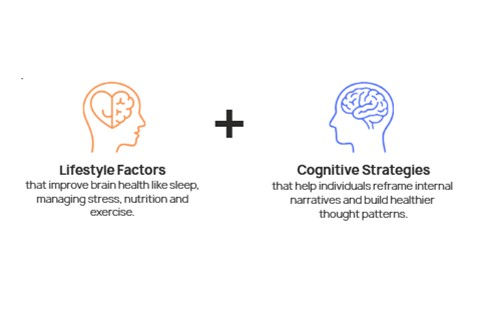
Corporate health and wellness doesn't fail because employees don't care about their health; it stalls when the daily work environment works against human biology. In an ideal scenario, they work hand-in-hand: Employees are given effective resources to manage their personal health and wellness while also experiencing a work environment that's designed for them to fully engage. By equipping managers with practical, science-backed training in stress regulation, psychological safety, and intrinsic motivation, employers stop treating wellbeing as an isolated program—and start building a healthier, safer, and measurably higher-performing workforce.
Reach out if you're interested in learning more about HBD's neuroscience-based leadership development or comprehensive workforce health and wellness programming.


Comments